Marine Resources Conservation Project in Central America

Photo: Phillip Hamilton (IYOV Bank Mesoamerican)

COMPLETED PROJECTS
2012 to 2020

Introduction
An effective way to address the various threats facing the Mesoamerican Reef is through the development of a regional, interconnected, and functional network of Marine and Coastal Protected Areas (MCPAs). If properly managed, the resulting network – the backbone of the reef – will protect fish populations, diverse habitats, spawning aggregation sites, aquatic resources, forest resources, recreational opportunities, and development and growth possibilities for the eco-region.

Well-managed protected areas regulate access to fisheries, protecting the species that make up the different ecosystems and allowing population recovery, or at a minimum, the maintenance of levels needed to support sustainable livelihoods for communities. Additionally, the inclusion of coastal areas within a regional network preserves seagrass beds and mangroves, providing critical habitat for the reproduction of manatees, turtles, and other species. This coastal habitat also prevents soil erosion and filters water, acting as a buffer zone between the watershed and the reef. Finally, within the protected areas framework, it is possible to reduce the impacts of climate change by applying appropriate management practices and protecting resilient reefs.

Mapa de áreas y proyectos de conservación  

Para seleccionar las áreas prioritarias, MAR Fund facilitó un proceso que incluyó la participación de diferentes actores de los cuatro países. La metodología que se diseñó para este propósito fue inicialmente aplicado a través de cuatro talleres para obtener prioridades nacionales. Estos resultados después fueron analizados en un taller regional, en cual se definieron las primeras prioridades de la región. La red inicial de 14 áreas está incluida en el mapa.

El Proyecto Conservación de Recursos Marinos en Centroamérica se orientó a poner en práctica mecanismos de conservación efectivos a largo plazo en nueve áreas. Se apoyaron los procesos de planificación, monitoreo, actualización de planes de manejo, sistemas de control y vigilancia, infraestructura y equipamiento, entre otros, para optimizar el trabajo de la administración de las áreas.

También se apoyaron, de manera consensuada con los diferentes usuarios de las APMC, una serie de actividades definidas por cada área protegida, con el objeto de hacer uso sostenible de los recursos, bienes y servicios de las áreas. Estas incluyeron como ejemplo las siguientes: códigos de conducta para distintas actividades extractivas, programas de incentivos para involucrar a las comunidades en acciones de conservación, co-manejo de zonas de conservación con los usuarios, estrategias para reciclado de desechos sólidos, campañas de reforestación de manglar y educación ambiental, buenas prácticas de pesca y turismo responsable.

La lógica de intervención del Proyecto tuvo como enfoque general mejorar la conservación y uso sostenible de la diversidad biológica presente en las nueve APMC seleccionadas.

This approach combines three strategies:

  1. Conservation of marine and coastal ecosystems.
  2. Improvement of management practices and sustainable use of marine and coastal resources.
  3. Small grants and implementation of mechanisms for knowledge and experience exchange among the the Project target groups, for example among MPA managers or among resource users.

Project Objective Indicators:

  1. Indicator 1: The financial gap does not increase in the MCPAs included in the Project.
  2. Indicator 2: Management Plans are updated and under implementation in 100% of the MCPAs included in the Project.
  3. Indicator 3: The MCPAs included in the Project have natural resource use plans under implementation.

Phase I

This project was supported by the Government of Germany through KfW, for a total of €5 million invested in four priority marine and coastal protected areas over a five-year period.

The main objective of the Project is to contribute to the consolidation of marine and coastal protected areas, the protection of biological diversity and sustainable use of its components, the promotion of economic well-being, and the improvement of the quality of life of resident populations.

The Project area is defined by the Mesoamerican Reef System, shared among Mexico, Belize, Guatemala, and Honduras. The following Priority Marine and Coastal Protected Areas (MCPAs) are the the Project main investment areas:

  1. Área de Protección de Flora y Fauna Yum Balam, Mexico.
  2. Port Honduras Marine Reserve, Belize.
  3. Refugio de Vida Silvestre Punta de Manabique, Guatemala.
  4. Zona de Protección Marina Sandy Bay West End, Honduras.
a) Área de Protección de Flora y Fauna Yum Balam, México.
b) Port Honduras Marine Reserve, Belize.
c) Refugio de Vida Silvestre Punta de Manabique, Guatemala.
d) Zona de Protección Marina Sandy Bay West End, Honduras.
Evaluación de la Efectividad de Manejo en las cuatro Áreas Protegidas del Proyecto
Brecha financiera en las cuatro áreas protegidas del proyecto
Cobertura de pasto marino y manglares en las cuatro áreas protegidas del proyecto
Apoyo para la evaluación de los sistemas de indicadores físicos y biológicos implementados en las áreas protegidas marinas y costeras del Proyecto Conservación de Recursos Marinos en Centroamérica
Área de Protección de Flora y Fauna Yum Balam, México

Phase II

As with Phase I, this Phase of the Project was supported by the Government of Germany through KfW, for a total of €5 million invested in five priority marine and coastal protected areas over a five-year period.

This phase of the Project also contributed to the consolidation of marine and coastal protected areas, the protection of biological diversity and sustainable use of its components, the promotion of economic well-being, and the improvement of the quality of life of resident populations.

The Project area is defined by the Mesoamerican Reef System, shared among Mexico, Belize, Guatemala, and Honduras. The following priority marine and coastal protected areas (MCPAs) are the main investment areas for the Project in this phase:

  1. Reserva Estatal Santuario del Manatí, Bahía Chetumal, Mexico.
  2. Santuario de Vida Silvestre Corozal Bay, Belize.
  3. South Water Caye Marine Reserve, Belize.
  4. Área de Usos Múltiples Río Sarstún, Guatemala.
  5. Turtle Harbour Rock Harbour Marine Special Protection Zone, Honduras.
a) Área de Protección de Flora y Fauna Yum Balam, México.
b) Port Honduras Marine Reserve, Belize.
c) Refugio de Vida Silvestre Punta de Manabique, Guatemala.
d) Zona de Protección Marina Sandy Bay West End, Honduras.
Evaluación de la Efectividad de Manejo en las cuatro Áreas Protegidas del Proyecto
Brecha financiera en las cuatro áreas protegidas del proyecto
Cobertura de pasto marino y manglares en las cuatro áreas protegidas del proyecto
Apoyo para la evaluación de los sistemas de indicadores físicos y biológicos implementados en las áreas protegidas marinas y costeras del Proyecto Conservación de Recursos Marinos en Centroamérica
Área de Protección de Flora y Fauna Yum Balam, México

Proyecto Conservación Recursos Marinos en C. A.

Photo: Phillip Hamilton (IYOV Bank Mesoamerican)

COMPLETED PROJECTS
2012 to 2020

Introduction
An effective way to address the various threats facing the Mesoamerican Reef is through the development of a regional, interconnected, and functional network of Marine and Coastal Protected Areas (MCPAs). If properly managed, the resulting network – the backbone of the reef – will protect fish populations, diverse habitats, spawning aggregation sites, aquatic resources, forest resources, recreational opportunities, and development and growth possibilities for the eco-region.

Well-managed protected areas regulate access to fisheries, protecting the species that make up the different ecosystems and allowing population recovery, or at a minimum, the maintenance of levels needed to support sustainable livelihoods for communities. Additionally, the inclusion of coastal areas within a regional network preserves seagrass beds and mangroves, providing critical habitat for the reproduction of manatees, turtles, and other species. This coastal habitat also prevents soil erosion and filters water, acting as a buffer zone between the watershed and the reef. Finally, within the protected areas framework, it is possible to reduce the impacts of climate change by applying appropriate management practices and protecting resilient reefs.

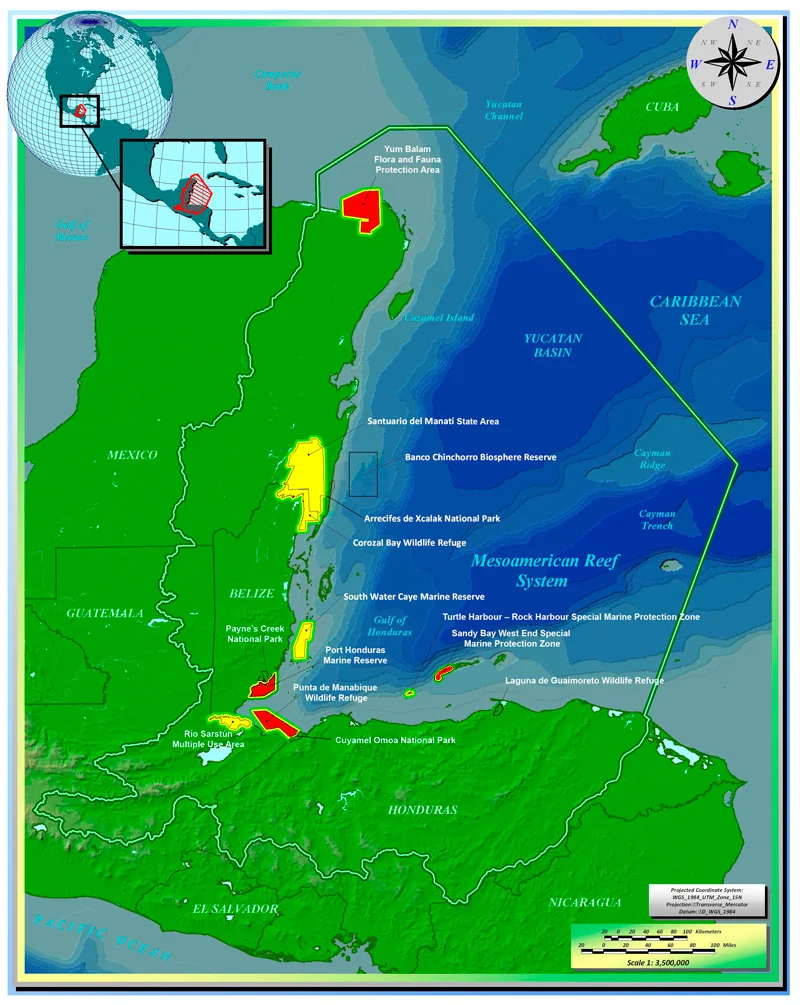
Mapa de áreas y proyectos de conservación  

To select priority areas, MAR Fund facilitated a process that included the participation of different stakeholders from the four countries. The methodology designed for this purpose was initially applied through four workshops to establish national priorities. These results were then analyzed at a regional workshop, where the first regional priorities were defined. The initial network of 14 areas is included in the map.

The Marine Resource Conservation Project in Central America was oriented toward implementing effective long-term conservation mechanisms in nine areas. Planning, monitoring, management plan updates, control and surveillance systems, infrastructure and equipment processes, among others, were supported to optimize the work of area administration.

In consensus with the different MCPA users, a series of activities defined by each protected area were also supported with the objective of making sustainable use of the resources, goods, and services of the areas. These included, for example: codes of conduct for different extractive activities, incentive programs to involve communities in conservation actions, co-management of conservation zones with users, solid waste recycling strategies, mangrove reforestation campaigns and environmental education, good fishing practices, and responsible tourism.

The Project intervention logic had the general objective of improving conservation and sustainable use of biological diversity in the nine selected MCPAs.
This approach combines three strategies:

  1. Conservation of marine and coastal ecosystems.
  2. Improvement of management practices and sustainable use of marine and coastal resources.
  3. Small grants and implementation of mechanisms for knowledge and experience exchange among the the Project target groups, for example among MPA managers or among resource users.

Project Objective Indicators:

  1. Indicator 1: The financial gap does not increase in the MCPAs included in the Project.
  2. Indicator 2: Management Plans are updated and under implementation in 100% of the MCPAs included in the Project.
  3. Indicator 3: The MCPAs included in the Project have natural resource use plans under implementation.

Phase I

This project was supported by the Government of Germany through KfW, for a total of €5 million invested in four priority marine and coastal protected areas over a five-year period.

The main objective of the Project is to contribute to the consolidation of marine and coastal protected areas, the protection of biological diversity and sustainable use of its components, the promotion of economic well-being, and the improvement of the quality of life of resident populations.

The Project area is defined by the Mesoamerican Reef System, shared among Mexico, Belize, Guatemala, and Honduras. The following Priority Marine and Coastal Protected Areas (MCPAs) are the the Project main investment areas:

  1. Área de Protección de Flora y Fauna Yum Balam, Mexico.
  2. Port Honduras Marine Reserve, Belize.
  3. Refugio de Vida Silvestre Punta de Manabique, Guatemala.
  4. Zona de Protección Marina Sandy Bay West End, Honduras.
a) Área de Protección de Flora y Fauna Yum Balam, México.
b) Port Honduras Marine Reserve, Belize.
c) Refugio de Vida Silvestre Punta de Manabique, Guatemala.
d) Zona de Protección Marina Sandy Bay West End, Honduras.
Evaluación de la Efectividad de Manejo en las cuatro Áreas Protegidas del Proyecto
Brecha financiera en las cuatro áreas protegidas del proyecto
Cobertura de pasto marino y manglares en las cuatro áreas protegidas del proyecto
Apoyo para la evaluación de los sistemas de indicadores físicos y biológicos implementados en las áreas protegidas marinas y costeras del Proyecto Conservación de Recursos Marinos en Centroamérica
Área de Protección de Flora y Fauna Yum Balam, México

Phase II

As with Phase I, this Phase of the Project was supported by the Government of Germany through KfW, for a total of €5 million invested in five priority marine and coastal protected areas over a five-year period.

This phase of the Project also contributed to the consolidation of marine and coastal protected areas, the protection of biological diversity and sustainable use of its components, the promotion of economic well-being, and the improvement of the quality of life of resident populations.

The Project area is defined by the Mesoamerican Reef System, shared among Mexico, Belize, Guatemala, and Honduras. The following priority marine and coastal protected areas (MCPAs) are the main investment areas for the Project in this phase:

  1. Reserva Estatal Santuario del Manatí, Bahía Chetumal, Mexico.
  2. Santuario de Vida Silvestre Corozal Bay, Belize.
  3. South Water Caye Marine Reserve, Belize.
  4. Área de Usos Múltiples Río Sarstún, Guatemala.
  5. Turtle Harbour Rock Harbour Marine Special Protection Zone, Honduras.
a) Área de Protección de Flora y Fauna Yum Balam, México.
b) Port Honduras Marine Reserve, Belize.
c) Refugio de Vida Silvestre Punta de Manabique, Guatemala.
d) Zona de Protección Marina Sandy Bay West End, Honduras.
Evaluación de la Efectividad de Manejo en las cuatro Áreas Protegidas del Proyecto
Brecha financiera en las cuatro áreas protegidas del proyecto
Cobertura de pasto marino y manglares en las cuatro áreas protegidas del proyecto
Apoyo para la evaluación de los sistemas de indicadores físicos y biológicos implementados en las áreas protegidas marinas y costeras del Proyecto Conservación de Recursos Marinos en Centroamérica
Área de Protección de Flora y Fauna Yum Balam, México

Taller inicial de la 2ª. convocatoria

Del 1 al 3 de julio de 2025, se llevó a cabo en Ciudad de Guatemala el Taller Inicial para los proyectos seleccionados en la segunda convocatoria del proyecto «Protección de los Recursos Marítimos en América Central III (Fase III)”, una iniciativa financiada por la Cooperación Alemana a través del KfW, en el marco del programa Salvando Nuestras Áreas Protegidas de MAR Fund.

Durante tres días, 31 representantes técnicos y administrativos de 16 áreas protegidas marino costeras de México, Belice, Guatemala y Honduras se reunieron para fortalecer capacidades, intercambiar experiencias y alinear estrategias para una implementación efectiva y coordinada de sus proyectos.

También participaron organizaciones de sociedad civil que acompañarán la ejecución de estos proyectos.

Leer la nota completa >>