MAR Connectivity Network
Photo: Belize Audubon Society
Introduction
Our team builds on successful five-year academic and management partnerships between CONANP (National Commission for Natural Protected Areas), ECOSUR (El Colegio de la Frontera Sur), CINESTAV (Center for Research and Advanced Studies), the NOAA-SEFSC Early Life History Unit, the NOAA-AOML Physical Oceanography Division, and the Rosenstiel School of Marine and Atmospheric Science (RSMAS) at the University of Miami. This interdisciplinary work is generating preliminary research and management results, including assessments of larval reef fish biodiversity, distribution, and relevant coastal oceanographic dynamics.
This includes ecologically and socioeconomically important fish for the Mesoamerican Reef System, such as snapper, grouper, parrotfish, and triggerfish. Two major questions motivate this research:
- What is the level of larval dispersal and recruitment connectivity within and between the Mesoamerican Reef, the Dry Tortugas Reserve, and the Florida Keys National Marine Sanctuary?
- Is there evidence of self-recruitment within these marine reserves?
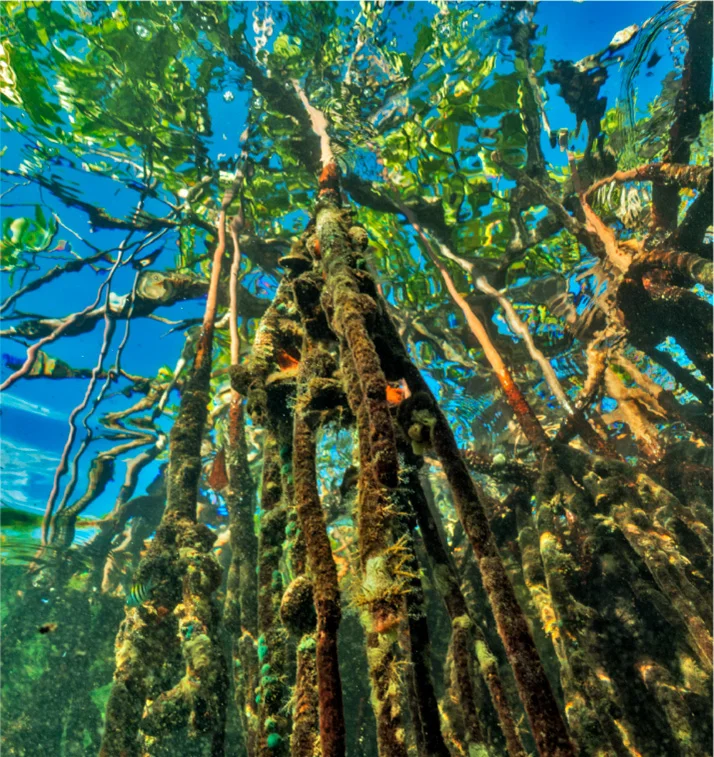
Photo: Fundación Albatros
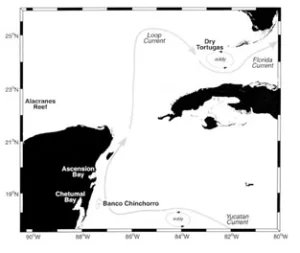
Reef fish populations represent one of the most complex ecosystems in the marine environment. They also represent the most exploited part of the ecosystem and have been driven to extremely low levels throughout the wider Caribbean. Despite the importance of these populations, relatively little is known about most stages of their life cycles or about their interaction with oceanographic patterns at the Mesoamerican scale. Critical information is largely lacking, for example on adult spawning behavior, the location and depth of spawning aggregations, and recruitment. Furthermore, little is known about the status of these fish populations in the western Caribbean along the Mesoamerican Reef System, although reserves there are considered to have been subject to relatively limited exploitation. Additionally, there are considerable gaps in our understanding of the complex circulation patterns along the western coast of Yucatán in the Caribbean, where the Caribbean Current and the Loop Current connect and flow into the Gulf of Mexico (see graph).
This area plays a potentially important, though still unknown, role in the subtropical eddy circulation pathway, which drives biological production and larval transport throughout this region. This research project was designed to provide a baseline study on the fisheries oceanography of the western Caribbean during winter spawning and to lay the groundwork for future fisheries management decisions.
In addition to multiple coastal surveys targeting juvenile and recently settled fish habitats, oceanographic ship surveys were conducted to establish a baseline on ichthyoplankton abundance and its regional distribution along the reef. The objectives and outcomes of this collaborative project include: 1) data applied directly to the development and updating of local and regional management plans, 2) technology transfer/training for future capacity development in local communities and academic institutions, and 3) tools and products for local government agencies, resource managers, and stakeholders.
The maps below show the sampling locations relative to the MPAs and the preliminary results of our 2006 fisheries oceanography survey. The abundance of grouper (Serranidae) is shown by station at different depths. Also included is the map with the 14 priority MPAs for MAR Fund.
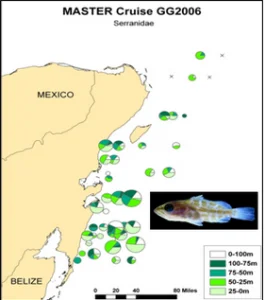
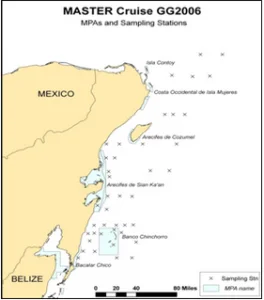
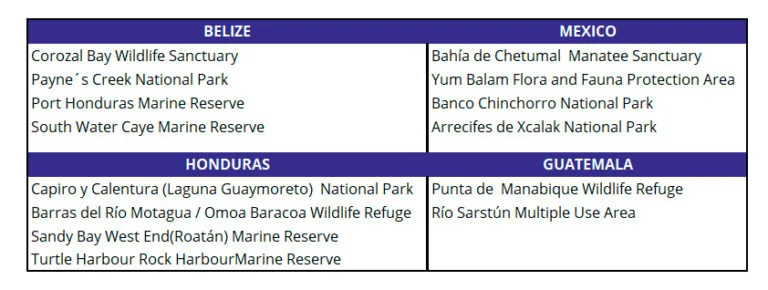
Since the SAM region has at least 63 coastal-marine protected areas that are part of the national protected area systems of the four countries, it was decided to work with a smaller group to build the initial network. The idea is to start with a smaller group of priority conservation areas and progressively incorporate additional areas.
The initial network includes 14 areas at the sites indicated in the table.
Regional Training Workshop on Marine Protected Areas: Connectivity in the Mesoamerican Reef. For more information on the topic of connectivity in the SAM, please visit the following sites:

First Regional Connectivity Workshop
Presentations
-
Goals and Results – Samantha Whitcraft & Estrella Malca / NOAA
Strengthen regional capacity by creating a SAM Connectivity Coalition of managers and scientists; provide a mechanism and timeline for communications/collaborations among managers, ECOSUR, MAR Fund and NOAA-CIMAS-RSMAS. -
SAM MPA Prioritization – Claudio González / MAR Fund
Participatorily select a network of priority coastal-marine protected areas within the regional context of the Mesoamerican Reef System for initial investment. -
Spawning Aggregations Research Eloy Sosa / ECOSUR
Active research field. Background from the 1910s, regained momentum from the late 1980s. -
Larval Reef Fish Research – Lourdes Vásquez / ECOSUR
Larval Reef Fish Research – Lourdes Vásquez / ECOSUR. -
Oceanography Research Laura Carrillo / ECOSUR
Oceanography Research Laura Carrillo / ECOSUR -
Larval reef fish and fisheries oceanography research, Mesoamerican Reef – Overview Samantha Whitcraft & Estrella Malca / NOAA
Larval reef fish and fisheries oceanography research, Mesoamerican Reef – Overview Samantha Whitcraft & Estrella Malca / NOAA -
Case Study: Fisheries Oceanography in the USVI; management implications & applications Trika Gerard / NOAA
Case Study: Fisheries Oceanography in the USVI; management implications & applications Trika Gerard / NOAA -
Yum Balam Flora and Fauna Protection Area – Rafael de la Parra / CONANP
Yum Balam Flora and Fauna Protection Area – Rafael de la Parra / CONANP -
Isla Contoy National Park – Dr. Jaime González / CONANP
Isla Contoy National Park – Dr. Jaime González / CONANP
-
Manatee Sanctuary – Víctor Manuel Hernández / SEDUMA
Political Constitution of the United Mexican States. -
Cozumel Reef National Park – Ricardo Gómez Lozano / CONANP
Cozumel Reef National Park – Ricardo Gómez Lozano / CONANP -
Banco Chinchorro Biosphere Reserve / Xcalak Reef National Park – María del Carmen García Rivas / CONANP
Banco Chinchorro Biosphere Reserve / Xcalak Reef National Park – María del Carmen García Rivas / CONANP -
Corozal Bay Wildlife Sanctuary Zoe Walker / SACD
Corozal Bay Wildlife Sanctuary Zoe Walker / SACD -
Southwater Caye Marine Reserve Juan Chub / Belize Fisheries Department
Southwater Caye Marine Reserve Juan Chub / Belize Fisheries Department -
Port Honduras Marine Reserve Marlon Williams / TIDE
Port Honduras Marine Reserve Marlon Williams / TIDE -
Punta de Manabique Wildlife Refuge – Edelweiss Hildebrand / Fundación Mario Dary
Develop an integrated management system for the coastal-marine ecosystem of Punta de Manabique that allows for the maintenance of its essential ecological processes and sustainability in the production of goods and services: forest management, hunting, fishing, transit, tourism, and community development. -
Roatan Marine Park Jenny Myton / Roatán Marine Park
Roatan Marine Park Jenny Myton / Roatán Marine Park -
Sandy Bay West End Marine Reserve Jenny Myton / Roatán Marine Park
Sandy Bay West End Marine Reserve Jenny Myton / Roatán Marine Park - Sandy Bay West End Marine Reserve. Green Reef is dedicated to the conservation and sustainable use of Belize’s barrier reef complex and the associated marine environment in order to maintain the integrity of the ecosystems for the benefit of all humans.
-
Comunidad y Biodiversidad A.C. Constanza Ribot
Comunidad y Biodiversidad A.C. Constanza Ribot
Agenda
Agenda
This workshop aims to promote a greater understanding of biophysical connectivity across the Mesoamerican Reef System (SAM) and its potential role in ecosystem-scale management of protected areas, through the exchange of experiences and ideas between management and scientific staff to identify long-term convergent/common goals (see attached supporting documentation:
- NOAA-ELH/ECOSUR fisheries oceanography maps, and
- SAM Fund priority MPA map).
- Agenda
Press Release
Press Release
Más de 40 expertos de México, Belice, Honduras, Guatemala y Estados Unidos se reunieron del 17 al 19 de mayo del presente en el “Taller de Capacitación Regional sobre Áreas Marinas Protegidas: Conectividad en el Arecife Mesoamericano” celebrado en el Colegio de la Frontera Sur (ECOSUR) unidad Chetumal.
- Press Release
Second Regional Connectivity Workshop
Introduction
Second Regional Connectivity Workshop
Second Regional Workshop: Capacity Building in MPAs and Connectivity in the Mesoamerican Reef
Participants: natural resource managers from the region, staff, and key stakeholders working with/in the prioritized MPAs of the SAM region.
Purpose: This second workshop was designed to promote a better understanding of biophysical connectivity across the Mesoamerican Reef System (SAM) and its potential role in the ecosystem-based management of associated protected areas. This workshop aims to be a hands-on approach to connectivity research and data collection.
Where:
Day 1: El Colegio de la Frontera Sur (ECOSUR), Chetumal, Quintana Roo, Mexico.
Day 2: Xcalak Reef National Park, Quintana Roo, Mexico.
When:
March 13–14, 2012
Objectives:
The workshop objectives result from three priorities established by local managers at the 2010 workshop held at ECOSUR, Chetumal, Q. Roo:
- Workshop Objectives: provide hands-on expert training and exchange experiences in connectivity research regarding recruitment, invasive species (lionfish), and transport patterns in the reef region.
- Objetivos del manejo: apoyar la construcción de capacidades en la región del Arrecife a través de la formación de administradores locales y la “formación de formadores” en temas de conectividad y especies invasoras (pez león) con protocolos paralelos.
- Connectivity Research Objective: obtain comparable baseline information at the regional level. To this end, at least one simultaneous activity will be carried out across the entire network using the training gained in this workshop, combining biological and oceanographic components in the marine protected area network (at least one MPA per country).
During the workshop, a proposal will be developed by participants (managers, NGOs, and academic partners) who can coordinate, implement, and analyze, including the following components:
- Simultaneous recruitment (fish) collections with settlement traps, and
- Combine biological data with continuous temperature and sea-level measurements through sensors installed at monitoring sites.
Agenda
Agenda
Day 1
9:00 – 9:15 Welcome and introduction: workshop objectives and expected results (ECOSUR/NOAA-UM/MAR Fund).
9:15 – 10:30 Connectivity research on the Mesoamerican Reef & regional updates by MPA representatives (Government, academia or NGOs): overview presentations of work related to research, management, and connectivity in the region by Network members. (Each presentation will be a maximum of 15 minutes).
10:30 – 10:45 Coffee break
10:45 – 13:00 Cont. Mesoamerican Reef Connectivity Research & regional updates by MPA representatives (Government, academia or NGOs): overview presentations of work related to research, management, and connectivity in the region by Network members. (Each presentation will be 15 minutes).
13:00 – 14:00 Lunch
14:00 – 16:30 Parallel Sessions
14:00 – 15:15
Grupo 1
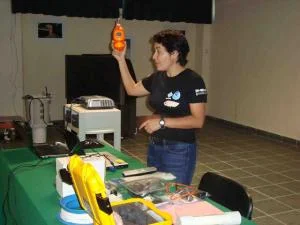
Demonstration of biological equipment, microscopy activities, how to prepare the larval observations database. Led by Lourdes Vasquez-Yeomans and Estrella Malca.
Grupo 2
Introduction al formato de datos y a la implementación de instrumentación (programación) usando la base de datos desarrollada en internet para el grupo de conectividad del SAM. Ejemplos: equipo oceanográfico, preparación y despliegue experimental. Liderado por Laura Carrillo, PhD
15:15 – 16:30
Grupo 1
Demonstration of biological equipment, microscopy activities, how to prepare the larval observations database. Led by Lourdes Vasquez-Yeomans and Estrella Malca.
Grupo 2
Introduction al formato de datos y despliegue y a la implementación de instrumentación (programación) usando la base de datos desarrollada en la red para el grupo de conectividad del SAM. Ejemplos: equipo oceanográfico, preparación y despliegue experimental. Liderado por Laura Carrillo, PhD
16:30 – 16:45 Coffee break
16:45 – 17:45 Invasive species in the Mesoamerican Reef: Lionfish Module, Part 1. Led by Eloy Sosa with collaboration from R. Gómez (CONANP)
16:45 – 17:15 Introduction (E. Sosa) – 30 min
17:15 – 17:45 Overview of lionfish control actions (R. Gómez) – 30 min
Day 2
06:00 – 7:30 Transfer to Xcalak, a fishing community within the Xcalak Reef National Park (PNAX). Breakfast will be served on the bus during the trip.
7:30 – 9:00 Field activity to collect deployed equipment (biological and oceanographic). This includes:
Juvenile/larval fish recruitment activities: biological collection, equipment preparation, and discussion. Led by Lourdes Vasquez-Yeomans and Estrella Malca.
Coastal oceanography field activity: experimental preparation and deployment of oceanographic equipment. Led by Laura Carrillo, PhD.
9:00 – 10:00 Lionfish collection. Activity coordinated by PNAX staff (J. Gómez).
10:00 – 10:20 Coffee break
10:20 – 12:30 Invasive species in the Mesoamerican Reef: Lionfish Module, Part 2. Led by Eloy Sosa, R. Gómez (CONANP), N. Hernandez (PNAC), J. Gómez (PNAX), E. Caamal (PNIC) and O. Álvarez (CONANP).
10:20 – 10:40 Measurement of key lionfish abundance data (N. Hernández and E. Sosa) – 20 min
10:40 – 10:55 Abundance assessment methods (E. Sosa and E. Caamal) – 15 min
10:55 – 11:10 Fisher participation in control programs, Puerto Morelos case study (O. Álvarez) – 15 min
11:10 – 11:25 Public participation in control programs, Xcalak case study (J. Gómez) – 15 min
11:25 – 12:00 Discussion and final observations (R. Gómez and E. Sosa). 35 min
12:00 – 13:00 Lunch
13:00 – 14:30 Analysis of collection data / sample analysis
13:00 – 13:45 Biological data – 45 min
13:45 – 14:30 Oceanographic data – 45 min
14:30 – 16:30 Project development by participants. Led by workshop organizers. Coordinate and establish objectives, tasks, time intervals, expected results, completion date, simulation protocol for simultaneous implementation of the Connectivity Network in the SAM region.
16:30 – 16:45 Coffee break
16:45 – 17:30 Workshop conclusions (summaries and lessons learned / discussion)
17:30 – 19:00 Transfer to Chetumal
2012 Results Summary
-
2012 Results Summary
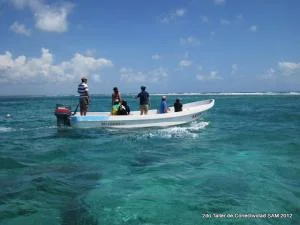
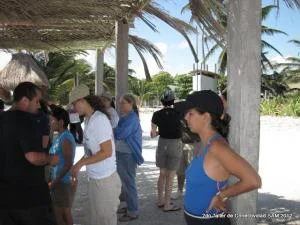
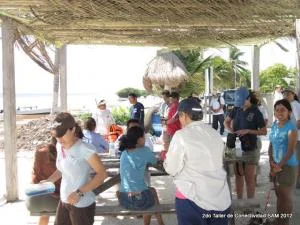
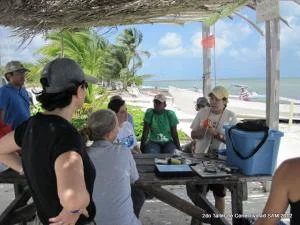
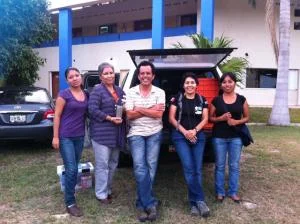
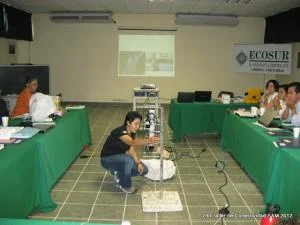
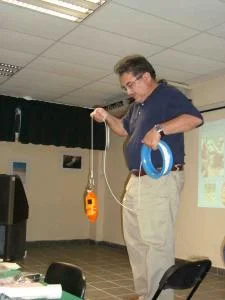
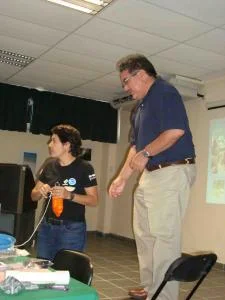
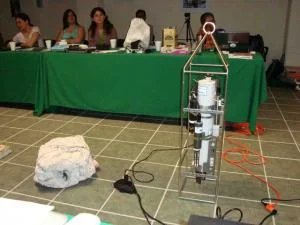
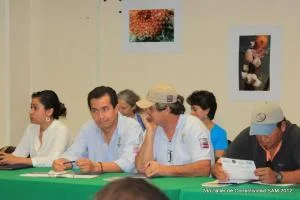
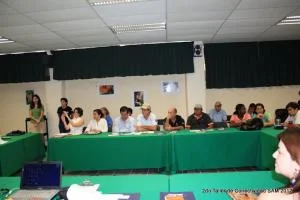
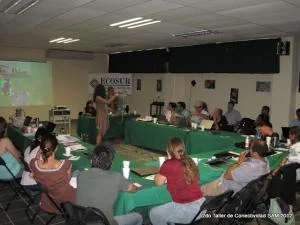
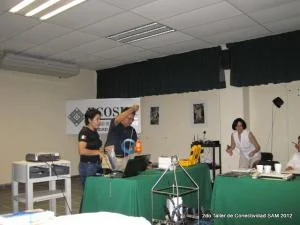
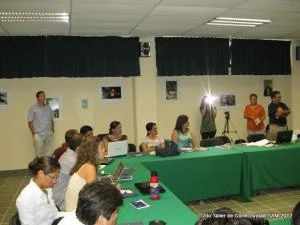
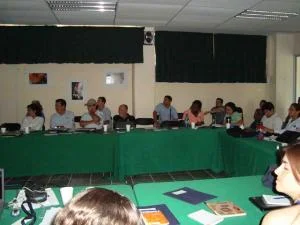
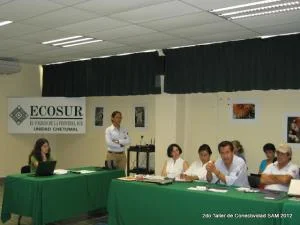
As planned, the 2nd Regional Workshop took place on March 13 and 14, 2012, at the ECOSUR facilities in Chetumal, with the second day dedicated to field activities at the Xcalak Reef National Park.
Photo Gallery
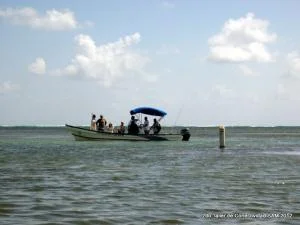
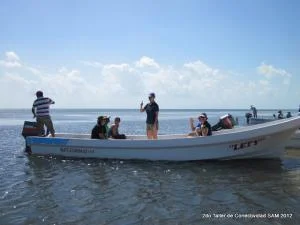
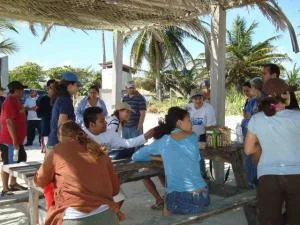
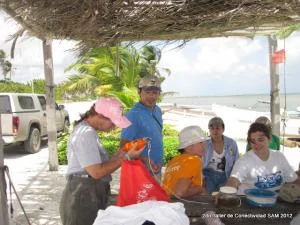
Documents
Documents
- Final Consolidated Report – ECOME
- Currents study in the Mesoamerican Reef
- Presentation – First analysis forum to strengthen state natural protected areas.
-
Marine Fisheries
Sosa-Cordero, E. and Angélica Ramírez González. 2011. Marine Fisheries. p. 183-189. In: C. Pozo, N. Armijo and S. Calmé. (Eds.). Biological Richness of Quintana Roo. An analysis for its conservation. Vol. I. ECOSUR-CONABIO-Government of the State of Quintana Roo-Small Grants Program-UNDP. -
The spiny lobster fishery Panulirus argus is an activity of ecological, social, and economic relevance on the coasts of Quintana Roo
Sosa-Cordero, E. 2011. The lobster, emblematic fishery of Quintana Roo. p. 221-227. In: C. Pozo, N. Armijo Canto and S. Calmé. (Eds.). Biological Richness of Quintana Roo. An analysis for its conservation. Vol. I. ECOSUR-CONABIO-Government of the State of Quintana Roo-Small Grants Program-UNDP. -
Isla Contoy National Park – Summer 2010
Field Work and laboratory work. We collected oceanographic data (temperature, salinity, currents, etc.) together with larval and juvenile fish collections at Isla Contoy National Park in August 2010. This work is a product of the collaboration of NOAA, ECOSUR, CONANP - Connectivity Workshop 2010
-
This handbook is a product of the Coral Reef Targeted Research & Capacity Building for Management Program (CRTR)
Preserving Reef Connectivity: A Handbook for Marine Protected Area Managers aims to help managers of coastal areas, in particular those of coastal marine protected areas (MPAs), understand and apply the concept of connectivity work. By Dr. Peter Sale among others. - Catalogue of post-larvae and juvenile fish of the SAM
- Consolidated Report of Connectivity Exercises (ECOME) in the SAM 2013 – 2016