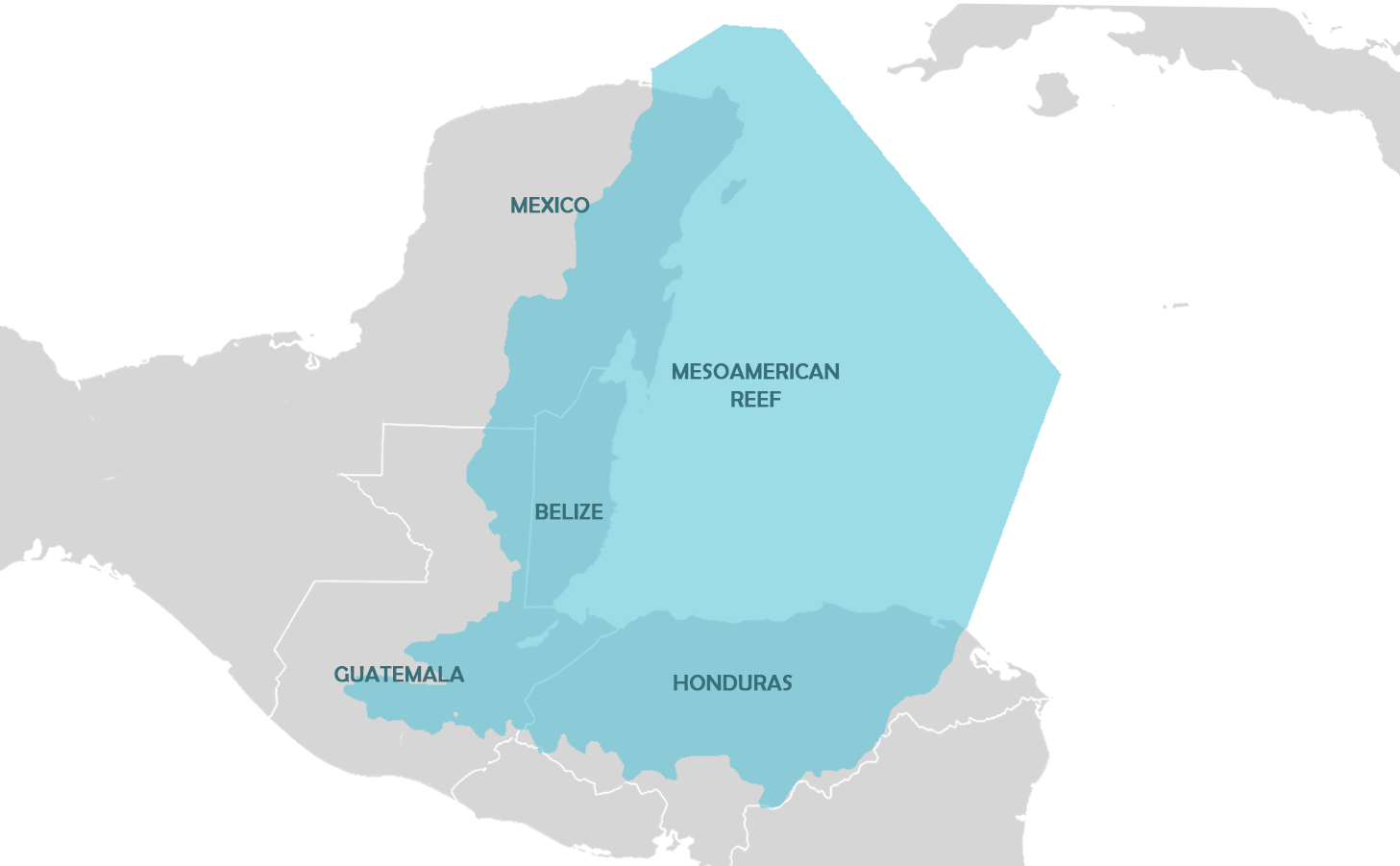
Collaboration is essential to protect the Mesoamerican Reef (MAR). By forming strategic alliances with organizations, communities, donors and individuals who are dedicated to marine conservation, we drive transformative projects that strengthen local capacities and promote the sustainable use of marine and coastal resources.
Allies and Partners
At the MAR Fund, we work alongside a diverse network of technical, community, and environmental organizations that work directly in the field to care for the MAR. These organizations implement projects on the front lines and enrich our work by sharing knowledge, local expertise, and innovative approaches.
We learn from their work in reef restoration, waste management, marine species protection, community strengthening, and other conservation practices. Together, we develop solutions tailored to local contexts, promote the exchange of best practices, and build capacities that extend beyond individual projects.
This active collaboration allows us to advance sustainable and resilient conservation efforts that contribute to the long-term protection of the Mesoamerican Reef and its communities.
Donors
We are deeply grateful to the foundations, development agencies, and individual donors who trust in MAR Fund and enable us to fund high-impact initiatives. Thanks to their support, we have made tangible progress in reef and mangrove restoration, protection of iconic marine species, and strengthening environmental governance in the region. Every contribution strengthens the resilience of the Mesoamerican Reef and creates lasting benefits for current and future generations.
10% For The Ocean
4Ocean
2X Global Limited
ACACIA LLP
Adaptation Fund Climate Innovation Accelerator (afcia)
Agence Française de Développement (AFD)
Agencia Estatal Superior de Investigaciones Científicas (csic)
BLUE PLANET FUND
Both ENDS
Brazilian Biodiversity Fund (funbio)
Cardiff University
Chicago Jewish Day School
Code Blue Charitable Foundation
Comisión Centroamericana de Ambiente y Desarrollo (ccad)
Secretaría General del Sistema de la Integración Centroamericana (sg-sica)
Compton Foundation Inc.
Comunidad y Biodiversidad (cobi)
Conservation International
Cooperación Alemana / KfW
El Colegio de la Frontera Sur (ECOSUR)
Environment and Climate Change Canada
Fondo de la Iniciativa para las Américas
Fondo Francés para el Medio Ambiente Mundial (ffem)
Fondo Mexicano para la Conservación de la Naturaleza
Fondo Mundial para los Arrecifes de Coral (gfcr)
Frankfurt School of Finance & Management GmbH
Fundación Avina
Fundación Fondo Centroamericano de Mujeres (fcam)
Fundación Fondo Naturaleza Chile
Fundación Marisla / Global Greengrants Fund
Fundación para la Conservación de los Recursos Naturales en Guatemala
German Embassy in Guatemala
Global Affairs Canada
Global Giving Foundation
Global resilience partnership
InsuResilience Solutions Fund
JRS Biodiversity Foundation
Leo Burnett uk
Logística de Restaurantes, S.A. (Dim Sum Tea House)
Love Animals.org
National Fish & Wildlife Foundation (nfwf)
National Geographic Society
National Oceanic and Atmospheric Administration
Network for Good
Niparaja, A. C
North American Association for Environmental Education
Oak Foundation
Ocean Risk and Resilience Action Alliance Inc.
Oceans 5 / Rockefeller Philanthropy Advisors, Inc.
Paul M. Angell Family Foundation
Proyecto PROCARIBE+ / United Nations Office for Project Services (UNOPS)
Programa de las Naciones Unidas para el Medio Ambiente (PNUMA)
Protected Areas Conservation Trust
Proyecto BRIDGE / Asociación Costa Rica por Siempre
Smithsonian Institution
Stockholm Resilience Centre
Stockholm University
The Coral Reef Alliance (CORAL)
The Curtis and Edith Munson Foundation
The David and Lucile Packard Foundation
The Flotilla Charitable Foundation
The Fondation de l´Orangerie for Individual Philanthropy
The Henry Foundation
The International Exchange (TIE)
The Nature Conservancy
The Ocean Foundation
The Overbrook Foundation
The Prince Albert II of Monaco Foundation
The summit foundation
The University of Queensland
ubs Financial Services, Inc.
United Nations Development Programme (undp)
United Nations Environment Program (UNEP)
United Nations Office for Project Services (UNOPS)
Del 1 al 3 de julio de 2025, se llevó a cabo en Ciudad de Guatemala el Taller Inicial para los proyectos seleccionados en la segunda convocatoria del proyecto «Protección de los Recursos Marítimos en América Central III (Fase III)”, una iniciativa financiada por la Cooperación Alemana a través del KfW, en el marco del programa Salvando Nuestras Áreas Protegidas de MAR Fund.
Durante tres días, 31 representantes técnicos y administrativos de 16 áreas protegidas marino costeras de México, Belice, Guatemala y Honduras se reunieron para fortalecer capacidades, intercambiar experiencias y alinear estrategias para una implementación efectiva y coordinada de sus proyectos.
También participaron organizaciones de sociedad civil que acompañarán la ejecución de estos proyectos.